

Can a DC Hipot Test Set be used for testing devices with different capacitance values?
As a supplier of DC Hipot Test Sets, I often encounter questions from customers regarding the compatibility of our test sets with devices of different capacitance values. This is an important topic as it directly impacts the effectiveness and safety of electrical testing procedures. In this blog post, I will explore whether a DC Hipot Test Set can be used for testing devices with varying capacitance values, and provide insights based on our experience in the industry.
Understanding DC Hipot Test Sets and Capacitance
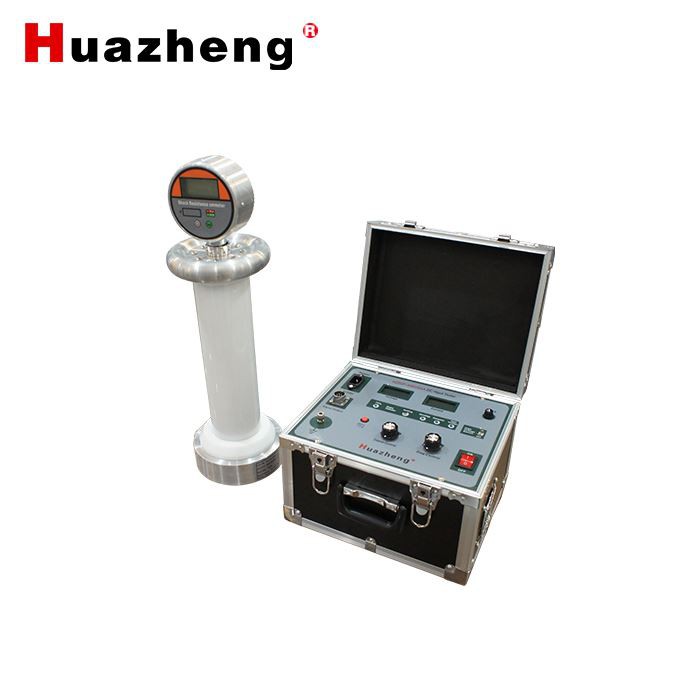
Before delving into the main question, it's essential to understand what a DC Hipot Test Set is and the role of capacitance in electrical devices. A DC Hipot Test Set, also known as a DC high - potential test set, is used to perform high - voltage tests on electrical equipment. The purpose of these tests is to detect insulation weaknesses or defects in the device under test (DUT).

Capacitance, on the other hand, is a measure of an electrical component's ability to store electrical energy in an electric field. Different electrical devices, such as cables, transformers, and capacitors themselves, have different capacitance values. These values can range from a few picofarads (pF) in small electronic components to several microfarads (μF) in larger power equipment.
The Relationship between DC Hipot Test Sets and Capacitance
When using a DC Hipot Test Set to test a device, the test set needs to charge the capacitance of the DUT during the test. The charging process is crucial as it allows the test set to apply the required high - voltage to the device and detect any insulation failures.
The time required to charge the capacitance of the DUT is a critical factor. A larger capacitance value means that more charge needs to be stored in the device, and thus, it takes longer to reach the desired test voltage. If the test set is not capable of providing enough current to charge the capacitance within a reasonable time, it may not be able to perform an accurate test.
Can a Single DC Hipot Test Set Handle Different Capacitance Values?
The short answer is yes, but with some limitations. Most modern DC Hipot Test Sets are designed to handle a certain range of capacitance values. However, the performance of the test set can vary depending on the specific model and its specifications.
For example, our 400kV 5mA High Voltage Tester DC Hipot Test Set is a high - power test set that is capable of handling relatively large capacitance values. It can provide a high current output, which allows it to charge large - capacitance devices quickly. This makes it suitable for testing high - voltage cables, large transformers, and other equipment with significant capacitance.
On the other hand, the HZZGF 120kV 5mA Portable DC Hipot Tester is more suitable for testing smaller devices. It is a portable and lightweight option, which is ideal for on - site testing of low - to medium - voltage equipment. While it can handle a certain range of capacitance values, it may not be as effective for testing large - capacitance devices due to its relatively lower power output.
The 200kV 5mA DC Hipot High Voltage Generator strikes a balance between the two. It can be used for a wider range of applications, including testing both medium - sized and some larger capacitance devices.
Factors to Consider When Testing Different Capacitance Values
When using a DC Hipot Test Set to test devices with different capacitance values, several factors need to be taken into account:
1. Current Rating
The current rating of the test set determines its ability to charge the capacitance of the DUT. A higher current rating allows the test set to charge larger capacitance values more quickly. However, it's important to ensure that the current rating is also within the safe limits of the DUT to avoid over - current damage.
2. Voltage Rating
The voltage rating of the test set must be appropriate for the device being tested. If the voltage rating is too low, it may not be able to detect insulation defects accurately. Conversely, if the voltage rating is too high, it can cause damage to the DUT.
3. Charging Time
The charging time of the DUT is directly related to its capacitance value. For devices with large capacitance values, the test set may require a longer charging time to reach the desired test voltage. It's important to allow sufficient time for the charging process to ensure accurate test results.
4. Discharge Time
After the test is completed, the DUT needs to be discharged safely. Devices with larger capacitance values store more electrical energy and may require a longer discharge time. Failure to discharge the device properly can pose a safety hazard to the operators.
Benefits of Using a Suitable DC Hipot Test Set
Using a DC Hipot Test Set that is suitable for the capacitance value of the DUT offers several benefits:
1. Accurate Results
A proper test set ensures that the device is charged to the correct test voltage, allowing for accurate detection of insulation defects. This helps in ensuring the safety and reliability of the electrical equipment.
2. Safety
By using a test set with appropriate specifications, the risk of over - current, over - voltage, or improper discharge can be minimized. This protects both the operators and the equipment being tested.
3. Efficiency
A test set that can handle the capacitance of the DUT efficiently can reduce the overall testing time. This is especially important when testing multiple devices or in a production environment.
Conclusion
In conclusion, a DC Hipot Test Set can be used for testing devices with different capacitance values, but the suitability depends on the specific capabilities of the test set. As a supplier, we offer a range of DC Hipot Test Sets, such as the 400kV 5mA High Voltage Tester DC Hipot Test Set, HZZGF 120kV 5mA Portable DC Hipot Tester, and 200kV 5mA DC Hipot High Voltage Generator, to meet the diverse needs of our customers.
If you are looking for a reliable DC Hipot Test Set for your testing requirements, we encourage you to contact us for a detailed discussion. Our team of experts can help you select the most appropriate test set based on the capacitance values of your devices and other specific requirements.
References
- Electrical Insulation Testing Handbook, various authors
- Standards for High - Voltage Testing, International Electrotechnical Commission (IEC)