

When testing devices with different capacitance values using a DC Hipot Test Set, several crucial considerations must be taken into account to ensure accurate results, equipment safety, and compliance with relevant standards. As a supplier of DC Hipot Test Sets, I have witnessed firsthand the importance of these factors in various testing scenarios.
Understanding Capacitance and Its Impact on DC Hipot Testing
Capacitance is a fundamental electrical property that measures a device's ability to store electrical energy in an electric field. In DC Hipot testing, the capacitance of the device under test (DUT) can significantly affect the test process and results. Devices with higher capacitance values require more charge to reach the test voltage, which can lead to longer charging times and higher current demands during the test.
For example, a large capacitor bank or a cable with a long length will have a relatively high capacitance. When testing such devices using a DC Hipot Test Set, the test set needs to supply a sufficient amount of current to charge the capacitance. If the test set cannot provide enough current, the charging process will be slow, and it may take a long time to reach the desired test voltage.
Selecting the Appropriate DC Hipot Test Set
One of the most critical considerations when testing devices with different capacitance values is selecting the right DC Hipot Test Set. The test set should have the appropriate voltage and current ratings to handle the capacitance of the DUT.
- Voltage Rating: The test set's voltage rating should be higher than the required test voltage for the DUT. This ensures that the test set can generate the necessary voltage to perform the test accurately. For instance, if you need to test a device at 30 kV, you should choose a DC Hipot Test Set with a voltage rating of at least 30 kV or higher.
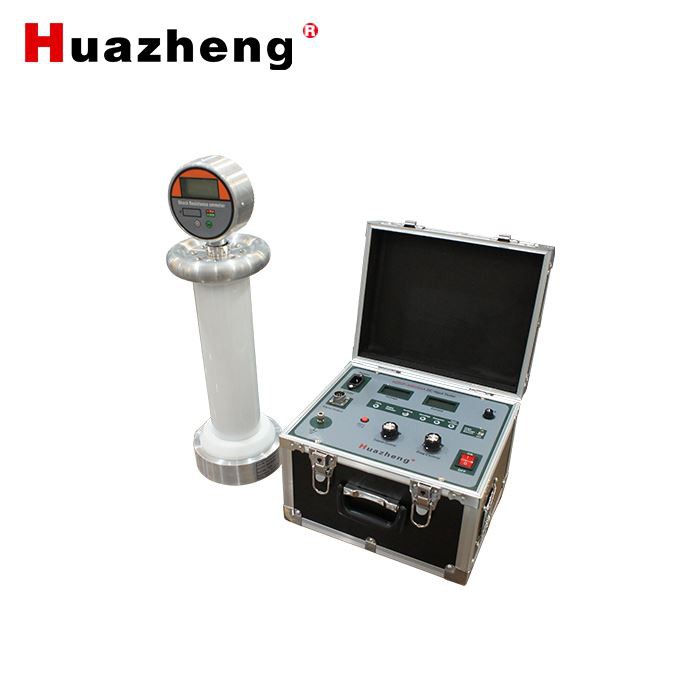
- Current Rating: The current rating of the test set is equally important. As mentioned earlier, devices with higher capacitance values require more current to charge. Therefore, the test set should have a sufficient current rating to meet the charging requirements of the DUT. Our HZZGF-Z 60kV 5mA Intelligent DC Hipot Test Equipment and HZZGF 80kV 5mA DC Hipot Testing Device are designed to provide high current outputs, making them suitable for testing devices with relatively high capacitance values.
Charging Time and Test Duration
The charging time is another crucial factor to consider when testing devices with different capacitance values. As the capacitance of the DUT increases, the charging time also increases. It is essential to allow sufficient time for the device to charge to the test voltage before starting the actual test.
During the charging process, the test set supplies current to the DUT to build up the voltage across its capacitance. Once the voltage reaches the test level, the test set maintains the voltage for a specified period to check for any insulation breakdown or leakage current. The test duration should be long enough to detect any potential issues but not too long to cause unnecessary stress on the DUT.
Leakage Current Measurement
Leakage current measurement is an integral part of DC Hipot testing. It helps to determine the integrity of the device's insulation. When testing devices with different capacitance values, the leakage current measurement can be affected by the charging current.
In the initial stage of the test, the charging current can be relatively high, especially for devices with high capacitance. This charging current may mask the actual leakage current, making it difficult to obtain an accurate measurement. To overcome this issue, it is recommended to wait until the charging current has decayed to a negligible level before taking the leakage current measurement.

Safety Precautions
Safety is of utmost importance when performing DC Hipot testing, especially when dealing with devices with different capacitance values. High-voltage testing can be dangerous, and proper safety measures should be taken to protect the operators and the equipment.
- Personal Protective Equipment (PPE): Operators should wear appropriate PPE, such as insulated gloves, safety glasses, and protective clothing, to prevent electric shock.
- Grounding: The DUT and the test set should be properly grounded to ensure electrical safety. A good grounding system can help to dissipate any stray currents and reduce the risk of electrical hazards.
- Overcurrent and Overvoltage Protection: The DC Hipot Test Set should be equipped with overcurrent and overvoltage protection devices to prevent damage to the DUT and the test set in case of a fault. Our 200kV 5mA DC Hipot High Voltage Generator is designed with advanced protection features to ensure safe and reliable operation.
Compliance with Standards
When testing devices with different capacitance values using a DC Hipot Test Set, it is essential to comply with relevant industry standards. These standards specify the test procedures, voltage levels, and acceptance criteria for different types of devices.
For example, the International Electrotechnical Commission (IEC) has established standards for electrical equipment insulation testing. Compliance with these standards ensures that the testing results are reliable and comparable. It also helps to ensure the safety and performance of the devices in real-world applications.
Conclusion
Testing devices with different capacitance values using a DC Hipot Test Set requires careful consideration of several factors, including capacitance understanding, test set selection, charging time, leakage current measurement, safety precautions, and compliance with standards. By taking these factors into account, you can ensure accurate and reliable test results, protect the equipment and operators, and meet the requirements of various applications.
If you are looking for high-quality DC Hipot Test Sets for your testing needs, we are here to help. Our range of products, including the HZZGF-Z 60kV 5mA Intelligent DC Hipot Test Equipment, HZZGF 80kV 5mA DC Hipot Testing Device, and 200kV 5mA DC Hipot High Voltage Generator, are designed to provide accurate and reliable testing solutions. Contact us today to discuss your specific requirements and explore how our products can meet your needs.
References
- IEC 60243-1:2013, Electrical equipment – Determination of dielectric strength of solid insulating materials at power, audio-frequency and pulse voltages
- ANSI/IEEE C37.90.1-2018, Standard for Relays and Relay Systems Associated with Electric Power Apparatus – Safety Requirements