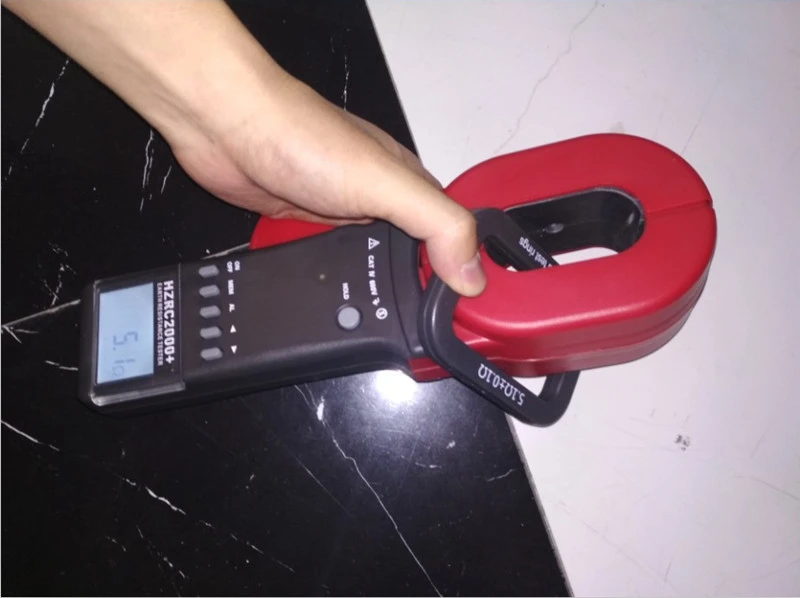
The grounding resistance tester is mainly used to measure the grounding resistance, soil resistivity, grounding voltage, AC current and leakage current of electric power, telecommunications, meteorological oil fields, buildings, lightning protection and industrial electrical equipment. However, the resistance testers used in different models or environments vary greatly.
At present, the market is mainly divided into digital grounding resistance tester, grounding network grounding resistance tester and clamp grounding resistance tester according to their functions. The main differences between grounding resistance testers are:
Digital grounding resistance tester:
1. Advantages: most commonly used in power, simple, fast and convenient
2. Scope of application: applicable to electric power, post and telecommunications, railway, petroleum, chemical, communication, mining and other departments, mainly for measuring the grounding resistance of various devices, measuring the conductor resistance of low resistance, and measuring soil resistivity and ground voltage
3. Inadequate: Generally, two auxiliary grounding electrodes need to be led out, which is limited by terrain and environment.
Clamp grounding resistance tester:
1. Advantages: this type of grounding resistance tester is small in size, light in weight, without wiring, without the need for the auxiliary level of ground pile manufacturing, safe and fast, and can also measure the leakage current on the ground wire.
2. Shortcomings: suitable for measuring the grounding system with loops, and the measurement results reflect the comprehensive value of the grounding resistance and the grounding down lead
3. Scope of application: grounding resistance measurement of telecommunication, meteorology, oil field, construction and industrial electrical equipment, and must be a looped grounding system
4. Model selection: resistance limit: 0.01~200 Ω;
+: Resistance limit: resistance range 0.01~1200 Ω
Resistance limit: 0.01~1200 Ω, current limit: 0.00mA-40.0A.
Earth network grounding resistance tester:
1. Advantages: high output power, frequency conversion anti-interference, high measurement accuracy. At the same time, frequency selection meter can also be selected to cooperate with the grounding resistance meter of the earth network for anti-interference measurement of surface potential gradient, step voltage and contact potential difference.
2. Inadequate: It needs to drive piles for wiring.
3. Scope of application: For power system and substation grounding grid measurement, it can accurately measure grounding impedance, step potential difference, contact potential difference, soil resistivity, field surface potential distribution, grounding grid current distribution and other grounding characteristic parameters.