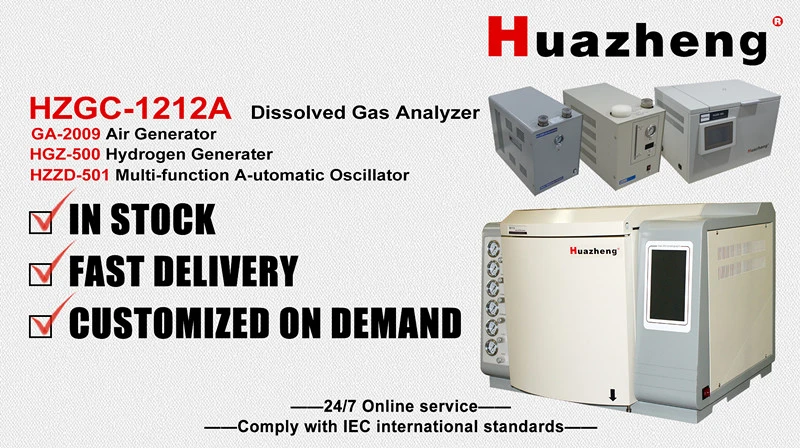
The basic structure of a gas chromatograph has two parts, an analysis unit and a display unit. The former mainly includes gas source and control metering device, sampling device, thermostat and chromatographic column. The latter mainly includes verifiers and automatic recorders. The chromatographic column (including the stationary phase) and the calibrator are the core components of a gas chromatograph.
(1) Carrier gas system The gas circuit in the gas chromatograph is a closed pipeline system in which the carrier gas runs continuously. The entire carrier gas system requires pure carrier gas, good airtightness, stable flow rate and accurate flow rate measurement.
(2) Sampling system Sampling is to add a gas or liquid sample to the upper end of the chromatographic column rapidly and quantitatively.
(3) Separation system The core of the separation system is the chromatographic column, which is used to separate multi-component samples into individual components. There are two types of chromatographic columns: packed columns and capillary columns.
(4) The function of the detection system detector is to convert the sample components separated by the chromatographic column into electrical signals according to their characteristics and contents, and after amplification, the recorder records them into a chromatogram.
(5) Signal recording or computer data processing system In recent years, gas chromatographs mainly use chromatographic data processors. The chromatographic data processor can print and record the chromatogram, and can print out the processed results, such as retention time, mass fraction of measured components, etc. on the same recording paper.
(6) Temperature control system It is used to control and measure the temperature of chromatographic column, detector and gasification chamber, and is an important part of gas chromatograph. Gas chromatographs are divided into two categories: one is gas-solid chromatograph, and the other is gas-liquid distribution chromatograph. The stationary phases separated by these two types of chromatographs are different, but the structure of the instruments is common.