

What is the control mode of a Battery Load Unit?
As a supplier of Battery Load Units, I am often asked about the control modes of these essential pieces of equipment. A Battery Load Unit (BLU) is a device used to test, discharge, and maintain batteries by applying a controlled electrical load. Understanding the control modes of a BLU is crucial for ensuring accurate testing and proper battery management. In this blog post, I will delve into the different control modes of a Battery Load Unit and explain how they work.
Constant Current Control Mode
One of the most common control modes in a Battery Load Unit is the constant current control mode. In this mode, the BLU is set to draw a fixed amount of current from the battery under test. This is particularly useful for testing the capacity of a battery, as it allows for a consistent discharge rate. For example, if you set the BLU to draw 10 amperes of current, it will maintain this current level throughout the discharge process, regardless of the battery's voltage.
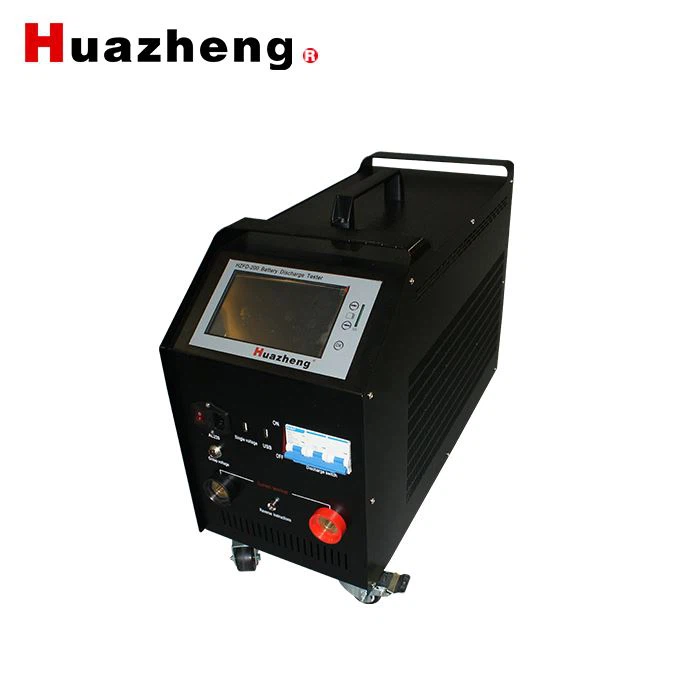

The constant current control mode is ideal for applications where a specific discharge rate needs to be maintained. It is commonly used in battery capacity testing, where the goal is to determine how long a battery can supply a certain amount of current. By maintaining a constant current, the test results are more accurate and repeatable.
Constant Voltage Control Mode
Another important control mode is the constant voltage control mode. In this mode, the BLU is set to maintain a specific voltage across the battery terminals. This is useful for applications where the battery needs to be charged or discharged at a specific voltage level. For example, if you are testing a 12-volt battery, you can set the BLU to maintain a voltage of 12 volts during the discharge process.
The constant voltage control mode is often used in battery charging applications, where the goal is to charge the battery to a specific voltage level. It is also used in battery discharge testing, where the battery is discharged at a constant voltage to simulate real-world operating conditions.
Constant Resistance Control Mode
The constant resistance control mode is less common but still useful in certain applications. In this mode, the BLU is set to maintain a specific resistance across the battery terminals. This is equivalent to applying a fixed load to the battery, and the current drawn from the battery will vary depending on the battery's voltage.
The constant resistance control mode is useful for testing the performance of a battery under different load conditions. It can also be used to simulate the behavior of a real-world load, such as a motor or a light bulb.
Programmable Control Mode
Many modern Battery Load Units offer a programmable control mode, which allows users to set a custom discharge profile. In this mode, the user can specify the current, voltage, or resistance values at different time intervals. This is useful for testing batteries under complex operating conditions, such as those found in electric vehicles or renewable energy systems.
For example, you can program the BLU to start with a high current discharge for the first few minutes, followed by a lower current discharge for the remainder of the test. This simulates the behavior of a battery during a typical driving cycle or a charging/discharging cycle in a renewable energy system.
Our Battery Load Unit Products
At our company, we offer a range of Battery Load Units with different control modes to meet the needs of our customers. Our HZFD-200A Lead Acid Battery Discharge Capacity Test Machine is a high-performance device that offers constant current, constant voltage, and programmable control modes. It is ideal for testing the capacity of lead acid batteries.
Our HZFD-200 Battery Test 48V 300A DC Load Bank is another popular product that offers a wide range of control modes, including constant current, constant voltage, and constant resistance. It is suitable for testing batteries with a voltage of up to 48 volts and a current of up to 300 amperes.
We also offer the HZFD-200 DC Load Bank Battery Discharge Tester, which is a versatile device that can be used for battery testing, charging, and maintenance. It offers a programmable control mode, allowing users to set custom discharge profiles.
Conclusion
In conclusion, the control mode of a Battery Load Unit is an important factor to consider when testing and maintaining batteries. The constant current, constant voltage, constant resistance, and programmable control modes each have their own advantages and are suitable for different applications. By understanding these control modes, you can choose the right Battery Load Unit for your needs and ensure accurate and reliable battery testing.
If you are interested in purchasing a Battery Load Unit or have any questions about our products, please feel free to contact us. We are always happy to help you find the right solution for your battery testing needs.
References
- Battery Testing Handbook, Second Edition, by Keith R. Symons
- Handbook of Batteries, Fourth Edition, by David Linden and Thomas B. Reddy