

Yo, folks! As a supplier of Transformer Oil BDV Testers, I've seen firsthand how temperature can have a major impact on the performance of these machines. In this blog post, I'm gonna break down exactly how temperature affects the BDV tester and what you can do about it.
Let's start with the basics. A Transformer Oil BDV Tester is used to measure the dielectric strength of transformer oil. This is a crucial test because the dielectric strength of the oil determines its ability to prevent electrical breakdown, which can lead to serious problems in transformers. But the accuracy of this test can be significantly influenced by temperature.
How Temperature Affects the Dielectric Strength of Transformer Oil
The dielectric strength of transformer oil is closely related to its physical properties, and temperature plays a key role in changing these properties. When the temperature rises, the viscosity of the transformer oil decreases. This means that the oil becomes thinner and more fluid. As a result, the movement of impurities and water droplets in the oil becomes easier, which increases the likelihood of an electrical breakdown.
On the other hand, when the temperature drops, the oil becomes more viscous. This can cause the impurities and water droplets to cluster together, forming larger particles. These larger particles are more likely to cause an electrical breakdown, reducing the dielectric strength of the oil.
Impact of Temperature on the Transformer Oil BDV Tester Itself
It's not just the oil that's affected by temperature; the BDV tester itself can also be influenced. At high temperatures, the electronic components in the tester may overheat. This can lead to errors in the measurement readings, as the components may not function properly. For example, the sensors that measure the breakdown voltage may give inaccurate readings if they get too hot.
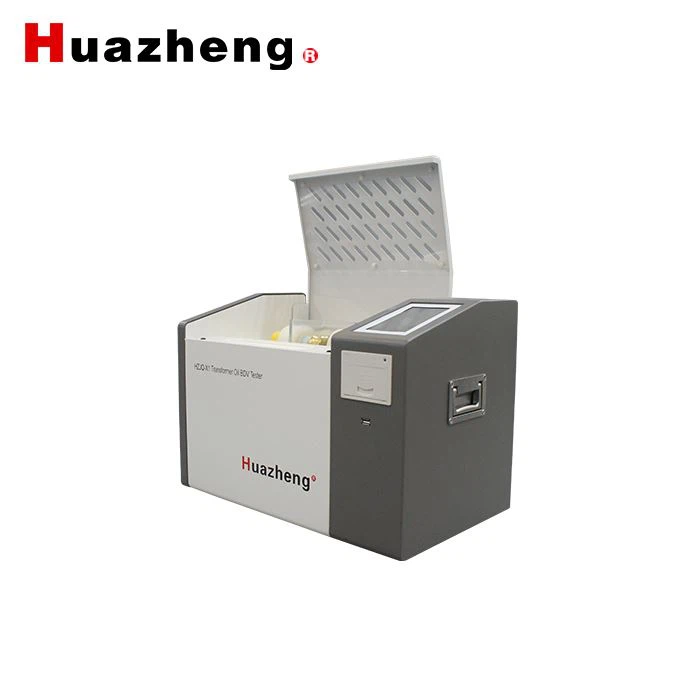

Conversely, at low temperatures, the chemical reactions in the batteries or other power sources of the tester may slow down. This can lead to a decrease in the power output, which can affect the accuracy of the tester. Additionally, the mechanical parts of the tester, such as the pumps and valves, may become more rigid in cold temperatures, making them less efficient.
Different Temperature Scenarios and Their Effects
High - Temperature Scenarios
In hot climates or during summer months, the temperature can easily exceed 30°C or even 40°C. At these high temperatures, the dielectric strength of the transformer oil may decrease significantly. For instance, in a laboratory test, it's been observed that the dielectric strength can drop by up to 10 - 15% when the temperature rises from 20°C to 40°C.
As a supplier, I've received feedback from customers working in hot regions. They've reported that the BDV test results might show lower breakdown voltages than normal, which can be misleading. If these inaccurate results are used to assess the quality of the transformer oil, it could lead to unnecessary oil changes or, worse, overlook potential problems in the transformer.
Low - Temperature Scenarios
In cold climates or during winter, temperatures can drop well below 0°C. At these low temperatures, the transformer oil becomes more viscous, as mentioned earlier. The BDV tester may have difficulty in accurately measuring the breakdown voltage due to the sluggish movement of the oil and the clustering of impurities.
Customers in cold areas have told me that it takes longer for the BDV tester to complete a test at low temperatures. Also, the results may be less consistent, as the tester has to work harder to overcome the high viscosity of the oil.
Solutions to Mitigate Temperature Effects
So, what can you do to ensure accurate BDV test results regardless of the temperature?
First, it's important to store and operate the BDV tester within the recommended temperature range specified by the manufacturer. Most BDV testers are designed to work best between 10°C and 30°C. If you're working in an environment outside this range, you may need to use temperature - controlling devices.
For high - temperature environments, you can use air - conditioning or cooling fans to keep the tester and the oil sample at a suitable temperature. In low - temperature areas, you can use heating pads or place the tester in a heated enclosure.
Another solution is to calibrate the BDV tester regularly, especially when there are significant temperature changes. This helps to ensure that the tester is providing accurate readings.
Our Product Line and Their Temperature Resistance
As a supplier, we offer a range of high - quality BDV testers that are designed to perform well in different temperature conditions.
The HZJQ - 1 Transformer Oil BDV Test Kit 80kV 100kV is a great option for both laboratory and field use. It's equipped with advanced temperature - compensation technology, which helps to maintain accurate readings even when the temperature fluctuates.
The 100kV Laboratory Transformer Oil Dielectric Strength Analyzer is specifically designed for laboratory applications. It has a robust construction and can withstand a wide range of temperatures, ensuring reliable performance in different environments.
The HZJQ - D1 70kV Insulating Oil BDV Testing Machine is a compact and portable option. It's easy to use and can provide accurate results even in challenging temperature conditions.
The HZJQ - X1 Portable Transformer Insulation Oil BDV Tester is ideal for on - site testing. It's designed to be lightweight and durable, and it can operate effectively in various temperature ranges.
The HZJQ - 1B Portable Transformer Oil Breakdown Voltage Analyzer is another great choice. It offers high - precision measurements and is resistant to temperature - related errors.
Conclusion
Temperature has a significant impact on the performance of a Transformer Oil BDV Tester and the dielectric strength of the transformer oil itself. By understanding these effects and taking appropriate measures, such as using temperature - controlling devices and regular calibration, you can ensure accurate test results.
If you're in the market for a reliable BDV tester, we've got you covered with our top - quality product line. Whether you're working in a hot desert or a cold tundra, our testers are designed to perform. Don't hesitate to reach out if you have any questions or if you're interested in purchasing one of our products. We're here to help you make the right choice for your transformer oil testing needs.
References
- IEEE Standard for Liquid - Immersed Transformers and Shunt Reactors
- ASTM D877 - Standard Test Method for Dielectric Breakdown Voltage of Insulating Liquids Using Disk Electrodes
- IEC 60156 - Insulating liquids - Determination of the breakdown voltage at power frequency