

Hey there! As a supplier of AC DC Hipot Testers, I often get asked about all sorts of technical details. One question that comes up quite a bit is, "What is the ripple factor of the DC output of an AC DC Hipot Tester?" Let's dive right into it.
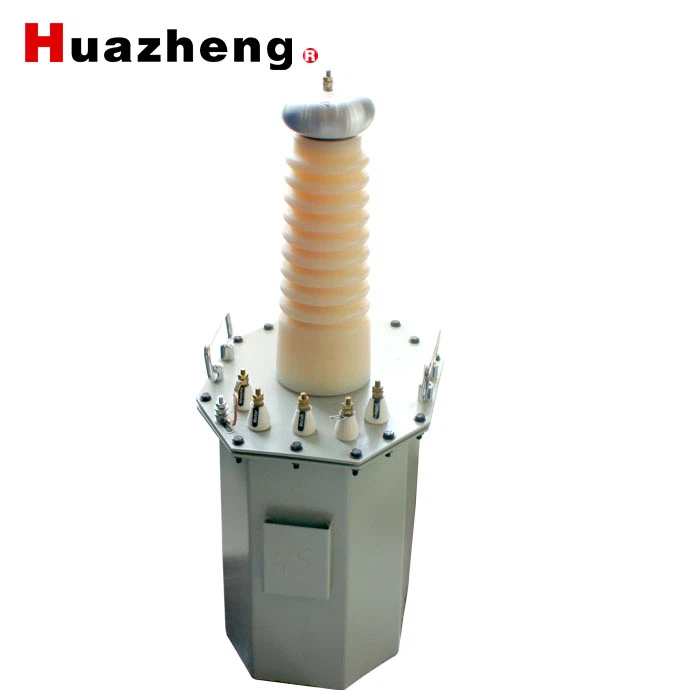

First off, let's understand what a Hipot Tester is. An AC DC Hipot Tester is a device used to perform high - potential (hipot) tests on electrical equipment. These tests are crucial to ensure the safety and reliability of electrical components. They check if the insulation of the equipment can withstand a specified high voltage without breaking down.
Now, the ripple factor is an important parameter when it comes to the DC output of a Hipot Tester. In simple terms, the ripple factor measures the amount of AC component present in the DC output. A pure DC signal should have no AC component, but in reality, there's always a small amount of AC "ripple" riding on top of the DC voltage.
Why does the ripple factor matter? Well, if the ripple factor is too high, it can cause issues in the hipot testing process. For example, it might lead to false test results. A high - ripple DC output could make it seem like the insulation is failing when, in fact, it's just the ripple causing some electrical noise.
To calculate the ripple factor, we use a simple formula. The ripple factor (r) is defined as the ratio of the root - mean - square (RMS) value of the AC component (Vrms) to the DC component (Vdc) of the output voltage. Mathematically, it's expressed as (r=\frac{V_{rms}}{V_{dc}}).
In a well - designed AC DC Hipot Tester, the ripple factor should be as low as possible. A low ripple factor indicates a more stable DC output, which is essential for accurate hipot testing. Most high - quality Hipot Testers aim for a ripple factor of less than 1% or even lower.
There are several factors that can affect the ripple factor of the DC output. One of the main factors is the design of the power supply circuit. The rectifier circuit, which converts AC to DC, plays a crucial role. A well - designed rectifier with proper filtering can significantly reduce the ripple factor.
Another factor is the load connected to the Hipot Tester. If the load is highly variable, it can cause fluctuations in the DC output and increase the ripple factor. So, it's important to ensure that the load is stable during the testing process.
Now, let me introduce some of our products. We have the HZJ 100kVA 250kV AC High Voltage Testing Equipment. This equipment is designed to provide a stable DC output with a very low ripple factor. It's suitable for a wide range of high - voltage testing applications.
We also offer the HZJZ 100kV Oil Immersed High Voltage AC Test Transformer. This transformer is built with advanced technology to ensure a reliable and low - ripple DC output. It's ideal for testing large electrical equipment.
And then there's the HZG 50Hz AC DC Power Frequency Withstand Voltage Test Set. This test set is known for its high - precision DC output with a minimal ripple factor. It can be used for both AC and DC hipot testing.
If you're in the market for an AC DC Hipot Tester, it's important to consider the ripple factor. A low - ripple DC output ensures more accurate and reliable test results. Our products are designed to meet the highest standards in terms of ripple factor and overall performance.
If you have any questions about our AC DC Hipot Testers or need more information on the ripple factor, feel free to reach out. We're always here to help you make the right choice for your testing needs. Whether you're testing small electrical components or large industrial equipment, we have the right solution for you. Let's start a conversation about how our products can meet your specific requirements.
References:
- Electrical Engineering textbooks on power electronics and high - voltage testing
- Manufacturer's documentation for AC DC Hipot Testers