

What is the minimum voltage that a Circuit Breaker Analyzer can measure?
As a supplier of Circuit Breaker Analyzers, I am often asked about the technical specifications of our products, and one of the most common questions is about the minimum voltage that a Circuit Breaker Analyzer can measure. In this blog post, I will delve into this topic in detail to help you understand the capabilities and limitations of these essential testing devices.
Understanding the Role of Circuit Breaker Analyzers
Circuit breaker analyzers are crucial tools in the electrical industry. They are used to test and evaluate the performance of circuit breakers, which are fundamental components in electrical systems. Circuit breakers protect electrical circuits from damage caused by overcurrent, short circuits, and other electrical faults. By analyzing various parameters of circuit breakers, such as opening and closing times, contact resistance, and coil current, circuit breaker analyzers ensure that these safety devices are functioning correctly and can be relied upon in critical situations.
Factors Affecting the Minimum Measurable Voltage
The minimum voltage that a circuit breaker analyzer can measure is influenced by several factors. Firstly, the design of the analyzer itself plays a significant role. Different models have different levels of sensitivity and precision, which are determined by the quality of the internal components, such as sensors and amplifiers. High - quality components can detect and measure very small voltage signals accurately.
Secondly, the type of circuit breaker being tested also affects the minimum measurable voltage. For example, low - voltage circuit breakers typically operate at voltages ranging from a few volts to a few hundred volts, while high - voltage circuit breakers can operate at thousands or even tens of thousands of volts. The analyzer needs to be able to measure the relevant voltage levels accurately for different types of circuit breakers.
Another factor is the application environment. In some industrial settings, there may be a high level of electrical noise, which can interfere with the measurement of small voltage signals. Analyzers with good noise - filtering capabilities are better able to measure the minimum voltage accurately in such environments.
Typical Minimum Measurable Voltages of Our Products
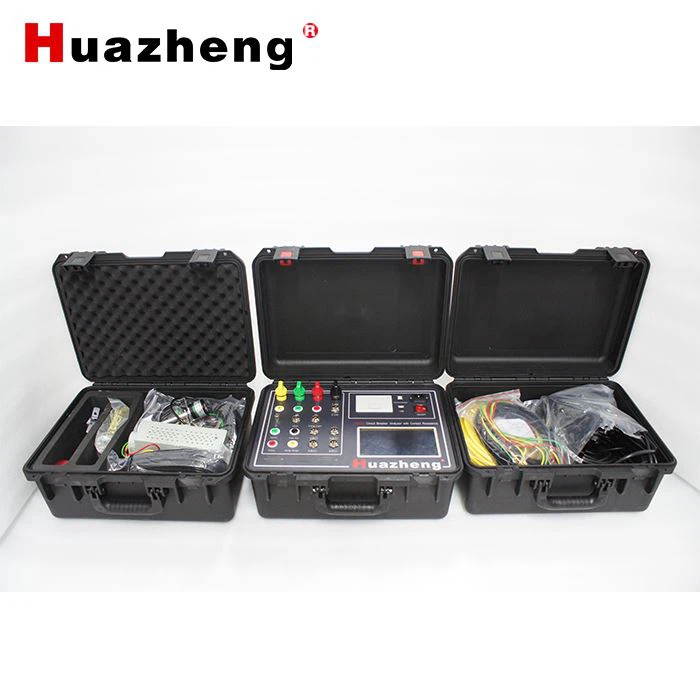
Our company offers a range of circuit breaker analyzers, each with different capabilities. For instance, the HZ2161 Comprehensive Circuit Breaker Characteristics Analyser is a highly versatile device. It can measure a wide range of electrical parameters, including voltage. The minimum voltage that this analyzer can measure is as low as 0.1 volts. This low minimum measurement capability makes it suitable for testing low - voltage circuit breakers, such as those used in residential and small commercial electrical systems.
The IEC62271 High Voltage Circuit Breaker Timing Test Set is designed specifically for high - voltage applications. Although it is mainly focused on measuring the timing characteristics of high - voltage circuit breakers, it also has the ability to measure voltage. The minimum voltage it can measure is around 1 volt. This is sufficient for detecting small voltage changes during the operation of high - voltage circuit breakers, which are essential for ensuring their proper functioning.
The HZDK - 1000 1000A DC Switch Ampere - Second Characteristic Tester is designed for testing DC switches. It has a minimum voltage measurement of 0.2 volts. This allows it to accurately measure the voltage across DC switches, which is important for evaluating their performance and safety.
Importance of Measuring Low Voltages
Measuring low voltages is crucial for several reasons. Firstly, it helps in detecting early signs of circuit breaker degradation. As a circuit breaker ages or experiences wear and tear, its electrical characteristics may change, including a decrease in the voltage drop across its contacts. By measuring low voltages accurately, we can identify these changes and take preventive maintenance measures before a complete failure occurs.
Secondly, in some electrical systems, low - voltage signals are used for control and monitoring purposes. Circuit breaker analyzers need to be able to measure these low voltages to ensure the proper operation of the entire electrical system. For example, in a smart grid system, low - voltage signals are used to communicate between different components, and any malfunction in the circuit breaker can disrupt this communication.
How to Ensure Accurate Low - Voltage Measurement
To ensure accurate low - voltage measurement with a circuit breaker analyzer, several steps can be taken. Firstly, proper calibration of the analyzer is essential. Regular calibration against a known standard ensures that the measurements are accurate and reliable.
Secondly, using high - quality test leads and probes can reduce the resistance in the measurement circuit, which helps in obtaining more accurate low - voltage measurements. Additionally, minimizing the length of the test leads can also reduce the interference from external electrical fields.
Finally, in noisy environments, using shielding techniques and noise - filtering algorithms can improve the signal - to - noise ratio, allowing for more accurate measurement of low voltages.

Conclusion
In conclusion, the minimum voltage that a circuit breaker analyzer can measure depends on various factors, including the analyzer's design, the type of circuit breaker being tested, and the application environment. Our company's circuit breaker analyzers, such as the HZ2161, IEC62271, and HZDK - 1000, are designed to meet different voltage measurement requirements, with minimum measurable voltages ranging from 0.1 volts to 1 volt. Measuring low voltages accurately is crucial for ensuring the safety and reliability of electrical systems.
If you are in the market for a circuit breaker analyzer or have any questions about our products' voltage measurement capabilities, we encourage you to contact us to discuss your specific needs and start the procurement process. We are committed to providing high - quality products and excellent customer service to meet your electrical testing requirements.
References
- Electrical Testing Handbook, Third Edition, by John D. McDonald
- Circuit Breaker Technology and Applications, published by the Institute of Electrical and Electronics Engineers (IEEE)