

As a supplier of SF6 gas analyzers, I understand the critical role these devices play in various industries, especially in ensuring the safety and efficiency of electrical equipment. SF6 gas is widely used in high-voltage electrical systems due to its excellent insulating and arc-quenching properties. However, to maintain its performance and prevent environmental and safety risks, accurate monitoring of SF6 gas is essential. This requires SF6 gas analyzers to operate under specific environmental conditions.
Temperature
Temperature is one of the most important environmental factors affecting the performance of SF6 gas analyzers. Most SF6 gas analyzers are designed to operate within a specific temperature range. Generally, the ideal operating temperature for SF6 gas analyzers is between -20°C and 50°C.
At low temperatures, the viscosity of SF6 gas increases, which can affect the flow rate and diffusion of the gas in the analyzer. This may lead to inaccurate measurement results. For example, if the temperature is too low, the gas may not flow smoothly through the sampling system, resulting in a delay in response time or an incorrect reading.
On the other hand, high temperatures can also cause problems. At elevated temperatures, the chemical properties of SF6 gas may change, and the performance of the sensors in the analyzer may degrade. Additionally, high temperatures can cause thermal expansion of the analyzer components, which may affect the accuracy of the measurement.
Humidity
Humidity is another crucial environmental factor. High humidity can introduce moisture into the SF6 gas, which can react with SF6 and form corrosive by - products. These by - products can damage the internal components of the analyzer and affect its performance.
Most SF6 gas analyzers are designed to operate in a relative humidity range of 0% - 95% non - condensing. Condensation inside the analyzer can short - circuit electrical components and damage the sensors. To prevent this, some analyzers are equipped with moisture - resistant coatings or desiccant systems to remove moisture from the sampled gas.
Pressure
The pressure of the SF6 gas being analyzed is also an important consideration. SF6 gas analyzers are typically calibrated to operate at a specific pressure range. Deviations from this range can lead to inaccurate measurements.
In general, the pressure of the SF6 gas in electrical equipment can vary depending on the application. The analyzer should be able to accurately measure the gas concentration within the expected pressure range. For example, in high - voltage switchgear, the pressure of SF6 gas can be several bar. The analyzer needs to be designed to handle these pressures without significant errors.
Air Quality
The quality of the surrounding air can also impact the performance of SF6 gas analyzers. Pollutants in the air, such as dust, smoke, and chemical vapors, can contaminate the sampling system and affect the accuracy of the measurement.
Dust particles can clog the sampling ports and filters, reducing the flow of gas into the analyzer. Chemical vapors, such as those from solvents or industrial emissions, can interfere with the sensors in the analyzer and cause false readings. To mitigate these effects, some SF6 gas analyzers are equipped with air filters and purification systems to remove contaminants from the sampled gas.
Vibration and Shock
SF6 gas analyzers are sensitive to vibration and shock. Excessive vibration can cause mechanical damage to the internal components of the analyzer, such as the sensors and circuit boards. Shock can also disrupt the calibration of the analyzer and lead to inaccurate measurements.
When installing an SF6 gas analyzer, it is important to place it in a stable location away from sources of vibration, such as motors or heavy machinery. If the analyzer needs to be used in a mobile or vibrating environment, it should be equipped with shock - absorbing mounts to protect it from damage.
Our SF6 Gas Analyzer Products
As a leading supplier of SF6 gas analyzers, we offer a range of high - quality products that are designed to meet the diverse needs of our customers.
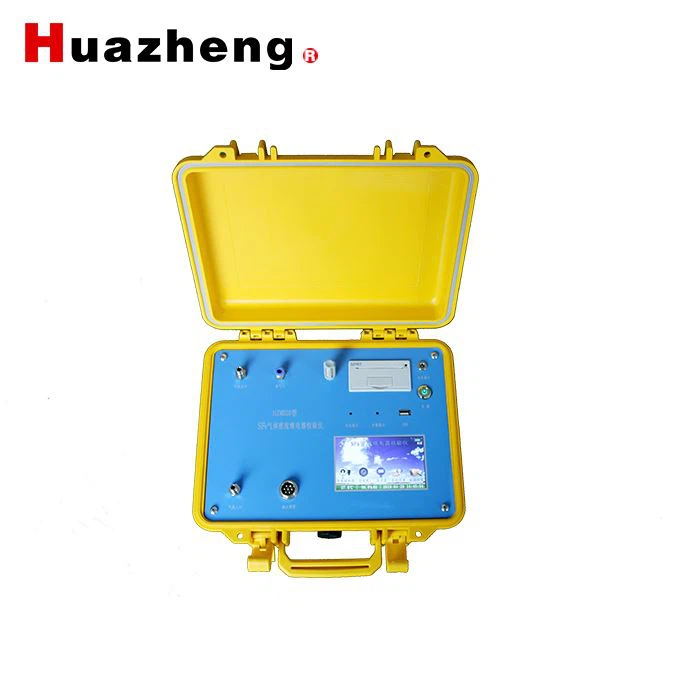

Our HZCOP58 SF6 Gas Infrared Quantitative Leak Test Equipment is a state - of - the - art device that uses infrared technology to accurately detect and quantify SF6 gas leaks. It is suitable for use in various environments and can provide reliable results even under challenging conditions.
The HZMD20 Sulfur Hexafluoride Sf6 Gas Density Relay Calibration System is another important product in our portfolio. This system is used to calibrate SF6 gas density relays, ensuring their accurate operation and the safety of electrical equipment.
Our HZIR - 1000 Infrared Quantitative SF6 Gas Leak Detector is a portable and easy - to - use device that can quickly detect and locate SF6 gas leaks. It is ideal for field applications and can help users save time and effort in detecting and repairing leaks.
Conclusion
In conclusion, SF6 gas analyzers need to operate under specific environmental conditions to ensure accurate and reliable measurements. Temperature, humidity, pressure, air quality, vibration, and shock are all important factors that can affect the performance of these analyzers.
As a supplier, we are committed to providing high - quality SF6 gas analyzers that can withstand a wide range of environmental conditions. Our products are designed with advanced technology and high - quality components to ensure accurate and reliable performance.
If you are interested in our SF6 gas analyzer products or have any questions about the environmental conditions required for their operation, please feel free to contact us for further information and to discuss your procurement needs.
References
- [1] International Electrotechnical Commission (IEC). IEC 60480:2018, Guidelines for the checking and treatment of sulfur hexafluoride (SF6) taken from electrical equipment and specification for its re - use.
- [2] IEEE Standard for the Installation, Maintenance, and Safety of Sulfur Hexafluoride (SF6) Gas - Insulated Substations, IEEE Std 1125 - 2018.