

Calibration is a crucial aspect of maintaining the accuracy and reliability of any measuring instrument, and circuit breaker testers are no exception. As a leading supplier of circuit breaker testers, I often receive inquiries from customers about how often they should calibrate their equipment. In this blog post, I'll delve into the factors that influence calibration frequency and provide some general guidelines to help you determine the optimal calibration schedule for your circuit breaker tester.
Why Calibration Matters
Before discussing the calibration frequency, it's important to understand why calibration is necessary. Circuit breaker testers are used to measure various electrical parameters such as contact resistance, opening and closing times, and trip currents. These measurements are critical for ensuring the proper functioning of circuit breakers, which are essential for protecting electrical systems from overloads and short circuits.
Over time, the accuracy of a circuit breaker tester can drift due to factors such as component aging, environmental conditions, and mechanical wear. Calibration is the process of comparing the tester's measurements to a known standard and adjusting it as necessary to ensure its accuracy. By calibrating your circuit breaker tester regularly, you can minimize measurement errors and ensure that your test results are reliable.
Factors Affecting Calibration Frequency
The calibration frequency of a circuit breaker tester depends on several factors, including:
- Manufacturer's Recommendations: The manufacturer of your circuit breaker tester will typically provide a recommended calibration interval in the product manual. This interval is based on the design and construction of the tester and is intended to ensure its continued accuracy and reliability. It's important to follow the manufacturer's recommendations to avoid voiding the warranty and to ensure that your tester is operating within the specified accuracy limits.
- Usage Frequency: The more frequently you use your circuit breaker tester, the more often it will need to be calibrated. Frequent use can cause wear and tear on the tester's components, which can affect its accuracy. If you use your tester daily or weekly, you may need to calibrate it more often than if you use it only occasionally.
- Environmental Conditions: The environment in which your circuit breaker tester is used can also affect its calibration frequency. Harsh environmental conditions such as high temperatures, humidity, and vibration can cause the tester's components to degrade more quickly, leading to measurement errors. If your tester is used in a challenging environment, you may need to calibrate it more often to ensure its accuracy.
- Accuracy Requirements: The accuracy requirements of your application will also influence the calibration frequency of your circuit breaker tester. If you need highly accurate measurements, you may need to calibrate your tester more frequently to ensure that it meets your accuracy requirements. On the other hand, if your application does not require high accuracy, you may be able to calibrate your tester less often.
General Calibration Guidelines
Based on the factors discussed above, here are some general guidelines for calibrating your circuit breaker tester:
- Annual Calibration: For most circuit breaker testers, an annual calibration is recommended. This interval is suitable for testers that are used regularly in normal environmental conditions and do not require extremely high accuracy.
- Semi-Annual Calibration: If you use your circuit breaker tester frequently or in harsh environmental conditions, you may need to calibrate it semi-annually. This will help to ensure that the tester's accuracy is maintained over time.
- Quarterly Calibration: In some cases, such as when high accuracy is required or when the tester is used in a critical application, quarterly calibration may be necessary. This will provide the highest level of accuracy and reliability.
It's important to note that these are general guidelines, and the actual calibration frequency may vary depending on the specific circumstances of your application. It's always a good idea to consult with the manufacturer of your circuit breaker tester or a qualified calibration service provider to determine the optimal calibration schedule for your equipment.
Our Circuit Breaker Testers
At our company, we offer a wide range of circuit breaker testers to meet the needs of various applications. Our testers are designed to provide accurate and reliable measurements, and they are backed by our commitment to quality and customer service.
One of our popular products is the HZ-SH100A 100A Digital Micro Ohmmeter Handheld Contact Resistance Test Set. This tester is designed to measure the contact resistance of circuit breakers and other electrical components with high accuracy. It features a digital display, a built-in memory, and a rechargeable battery, making it easy to use and portable.
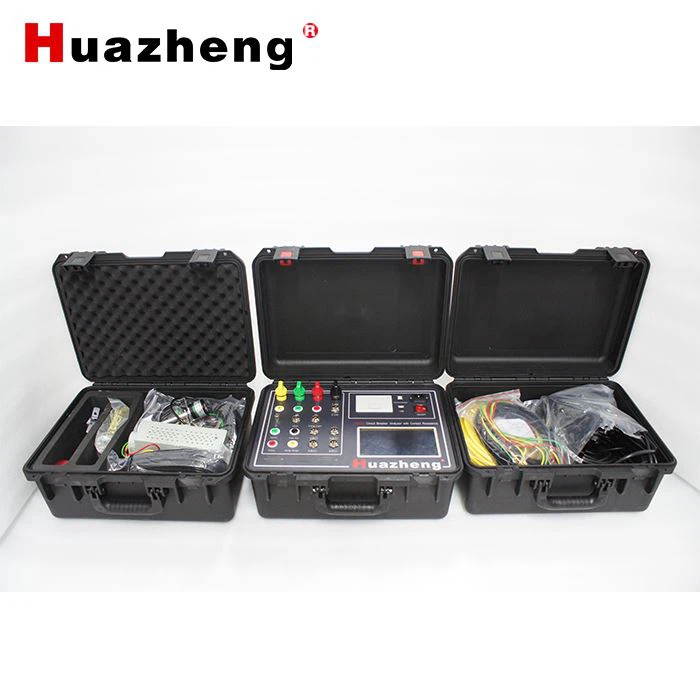
Another product is the HZ2161 Comprehensive Circuit Breaker Characteristics Analyser. This analyzer is capable of measuring various circuit breaker characteristics, including opening and closing times, contact resistance, and trip currents. It provides detailed test reports and can be used for both commissioning and maintenance purposes.
We also offer the HZ2364 Three Phase Portable Contact Resistance Measuring Equipment. This equipment is designed to measure the contact resistance of three-phase circuit breakers and other electrical components. It features a compact design, a high-resolution display, and a user-friendly interface, making it easy to use in the field.

Contact Us for More Information
If you have any questions about circuit breaker testers or calibration, or if you're interested in purchasing one of our products, please don't hesitate to contact us. Our team of experts is available to provide you with more information and to help you choose the right circuit breaker tester for your needs. We look forward to hearing from you and working with you to ensure the safety and reliability of your electrical systems.
References
- Manufacturer's product manuals for circuit breaker testers.
- Industry standards and guidelines for electrical testing and calibration.